The Real Truth: Ktc H27P3 27 Monitor or Acer Aspire Go 15?
Choosing between a dedicated display and a portable laptop is a common dilemma for buyers balancing workspace power with mobility. This article examines two very different products often considered by people rebuilding a home workstation or upgrading on a budget: the Ktc H27P3 27 monitor and the Acer Aspire Go 15 laptop. Rather than merely reciting specifications, the analysis focuses on real-world use cases, usability trade-offs, and the practical questions buyers care about — screen quality, ergonomics, performance for everyday tasks, connectivity, and long-term value.
Introduction: Different tools for different goals
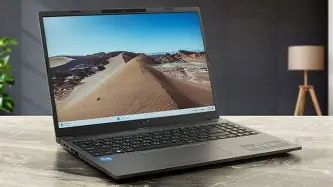
At a high level, a 27-inch monitor like the Ktc H27P3 is aimed at improving a desktop experience: more screen real estate, potentially better color and ergonomics, and a more immersive view for productivity, media consumption, and creative work. The Acer Aspire Go 15, by contrast, is designed around portability and all-in-one convenience: screen, keyboard, trackpad, battery, and a webcam in a single device for users who move between home, office, and public spaces.
The right choice depends less on which product is objectively “better” and more on how the user works. This comparison breaks down the practical strengths and weaknesses of each and helps match each device to the buyer’s priorities.
Ktc H27P3 27 Monitor — Detailed analysis
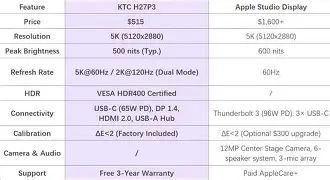
The Ktc H27P3 is a 27-inch display positioned for users who want a larger, clearer workspace without replacing their existing laptop or desktop. A monitor’s advantages are largely physical: screen size, mounting flexibility, and (often) cost-per-inch value compared with laptops.
Who benefits from a 27-inch monitor?
- Remote workers and professionals who spend hours on spreadsheets, IDEs, or multi-window workflows and need visible context.
- Creative hobbyists and entry-level content creators who want a larger canvas for photo editing, video scrubbing, or compositing.
- Gamers or media consumers who prefer a desktop gaming rig or streaming device with a larger screen for immersion.
- Students who use a separate laptop but want a comfortable study station at home.
When evaluating the Ktc H27P3 specifically, buyers should prioritize the following practical aspects:
- Panel type and color accuracy: IPS panels generally offer better viewing angles and color reproduction than TN, which matters for photo/video work and cooperative viewing.
- Resolution: 27 inches is often paired with 1080p (Full HD) or 1440p (QHD). For productivity and sharper UI, QHD is noticeably better; 1080p is serviceable but less crisp at this size.
- Refresh rate and response time: Higher refresh rates (e.g., 75Hz, 120Hz, or 144Hz) benefit gaming and perceived smoothness; response time affects motion clarity.
- Connectivity: Look for multiple inputs (HDMI, DisplayPort, USB-C) to support laptops, desktops, and peripherals without adapters.
- Ergonomics and mounting: Height adjustment, tilt, swivel, and VESA compatibility matter for posture and multi-monitor setups.
- Built-in speakers and extras: Integrated speakers are convenient but rarely replaceDesktop speakers or headphones; USB hubs or KVM features can add long-term convenience.
Real-world impressions
In daily use, a 27-inch monitor transforms cramped laptop screens into a comfortable multi-window environment. For office work, the Ktc H27P3 (or similar 27-inch models) reduces scrolling and window switching, which cuts friction and improves focus. For video work or casual gaming, a large monitor increases immersion and makes color grading or frame inspection easier — provided the panel and resolution are up to the task.
However, buyers should be mindful: a low-resolution 27-inch display can appear soft compared with a high-DPI laptop screen, and a monitor without ergonomic adjustments can introduce neck strain if mounted too low. The monitor becomes a permanent piece of a desk ecosystem — great for a home office, less useful for someone who frequently works on the go.
Pros & Cons — Ktc H27P3 27 Monitor
- Pros:
- Large display area that improves productivity and multi-window workflows.
- Better cost-per-inch compared with equivalent laptop displays.
- Potential for better color uniformity and viewing angles if equipped with an IPS panel.
- Flexible connectivity enables multi-device setups (desktop, laptop, consoles).
- VESA compatibility allows ergonomic mounting and multi-monitor configurations.
- Cons:
- Not portable — requires a separate computer to use.
- Quality varies by model; lower-cost panels can be soft or poorly calibrated out of the box.
- Built-in speakers, if present, are usually thin-sounding.
- Desk footprint and ergonomics must be planned; additional accessories (mount, arms) may be required.
Acer Aspire Go 15 — Detailed analysis
The Acer Aspire Go 15 represents the mobile side of the equation: a 15-inch laptop intended for users who prioritize portability without fully sacrificing screen size. Laptops like this are frequently offered in a range of configurations, spanning low-power efficiency models for long battery life to higher-performance SKUs with discrete graphics for light content creation or gaming.
Who benefits from a 15-inch laptop?
- Students and professionals who move between locations and need an all-in-one device with a keyboard, trackpad, and battery.
- People who need occasional heavier workloads (video calls, spreadsheets, photo edits) and prioritize battery life for off-desk use.
- Traveling creatives or consultants who require reasonable screen real estate combined with portability.
Key practical considerations for the Acer Aspire Go 15 include:
Discover deals on Laptops & Computers — updated daily.
Shop Amazon →- Processor and performance: Modern Intel or AMD CPUs can handle most office tasks; for heavier editing or gaming, look for higher-tier processors and sufficient RAM.
- RAM and storage: 8–16GB is the practical sweet spot for general use; SSD capacity and upgradeability matter for long-term performance.
- Display quality: 15-inch screens often have higher pixel density than 27-inch 1080p monitors; this makes text and UI crisper on the laptop by default.
- Battery life and thermals: Real-world battery life varies dramatically by workload; efficient processors and larger batteries yield the best endurance.
- Keyboard and trackpad: Typing comfort and a reliable trackpad are central to daily productivity.
- Ports and expandability: USB-C with video output, a full-size HDMI, and an SD card reader are practical bonuses for on-the-go workflows.
Real-world impressions
In practical use, a 15-inch laptop is a compromise: it is large enough to be comfortable for long editing sessions when a desk isn’t available, but compact enough for commuting. For remote work that includes frequent travel, the Acer Aspire Go 15-style laptop allows the user to set up anywhere — in a café, on a train, or in a meeting room — without needing peripherals.
However, a laptop can never match a dedicated monitor for pure screen area and, depending on configuration, may warm up under load and throttle performance. Buyers who favor constant high-performance desktop-level work or who need multiple large windows visible simultaneously will miss the extra screen space a 27-inch monitor provides.
Pros & Cons — Acer Aspire Go 15
- Pros:
- All-in-one mobility: screen, keyboard, battery, and webcam in one device.
- Crisper display at similar resolutions due to higher pixel density on 15-inch panels.
- Useful for students, mobile professionals, and anyone who values flexibility.
- Battery-powered operation removes the need for a permanent desk setup.
- Often configurable — buyers can prioritize battery life, CPU performance, or storage.
- Cons:
- Smaller physical screen area than a 27-inch monitor — less effective for multi-window desktop workflows.
- Thermals can limit sustained performance in thinner chassis.
- Limited upgradability compared with desktops; RAM or storage upgrades may be constrained by soldered components.
- Keyboards and speakers vary; some models feel less substantial than dedicated peripherals.
Side-by-side comparison
The table below summarizes practical differences and when each product type will typically be a better match for common buyer priorities. Specific capabilities can vary by model and configuration, so consider these rows as decision attributes rather than fixed specs.
| Attribute | Ktc H27P3 27 Monitor | Acer Aspire Go 15 |
|---|---|---|
| Primary strength | Screen real estate and desktop comfort | Portability and all-in-one convenience |
| Ideal for | Home office, creatives at a desk, gamers with desktop rigs | Students, commuters, remote workers, light creators |
| Display size | 27-inch (large workspace) | 15-inch (portable) |
| Pixel density | Depends on resolution (1080p vs 1440p); larger screen may appear less sharp at lower resolutions | Generally higher pixel density at the same resolution (crisper text) |
| Performance | Depends on connected PC; monitor has no internal compute | Depends on CPU/GPU config; limited by thermal/power envelope |
| Portability | Stationary (requires external computer) | High (battery-powered) |
| Connectivity | Multiple inputs best for multi-device desks; check for HDMI/DP/USB-C | USB-C, HDMI, Wi‑Fi, Bluetooth; acts as the primary hub |
| Upgradability | N/A for compute; monitor firmware sometimes updatable | Variable; SSD/RAM may be upgradeable on some SKUs |
| Price/value | Often better cost-per-inch for larger displays | Price depends on configuration; pay more for better CPU/longer battery |
Buying guide: How to choose between the two
Choosing between a monitor and a laptop is a decision best framed as a question: what does the buyer actually need on most days? The guide below walks through typical priorities and recommends the better option for each.
1. Mobility vs. a fixed workstation
If daily work involves moving between locations, a laptop is the sensible default. The Acer Aspire Go 15 is a practical balance of screen size and portability. If the primary work is done from one desk, a 27-inch monitor will deliver a more comfortable and productive environment when paired with a desktop or a docking laptop.
2. Screen real estate and multitasking
For users who constantly juggle documents, spreadsheets, chat windows, and browser tabs, a 27-inch monitor will reduce window switching and allow side-by-side layouts. Consider a QHD or higher resolution panel for better sharpness at this size.
3. Creative work and color accuracy
Color-sensitive tasks benefit from a monitor with an IPS panel, wide color gamut, and factory calibration or the ability to calibrate. If color-critical work is occasional and the user must be mobile, a higher-tier laptop panel may be sufficient, but a dedicated monitor remains the recommended choice for sustained creative work.
4. Gaming and media
For serious gaming, a monitor with high refresh rate and low response time is ideal. Laptops can be capable but often trade off sustained performance due to thermals. If gaming on a console or desktop is part of the routine, a 27-inch monitor often delivers a better visual experience.
Shop the latest Laptops & Computers picks on Amazon.
See Deals →5. Budget and long-term value
Monitors typically have a simpler upgrade path: upgrade the computer, keep the monitor. Laptops encapsulate both compute and display, so upgrades are limited and the entire unit is replaced when obsolete. Consider the total cost of ownership: a modest laptop plus a quality external monitor can be a flexible long-term solution.
6. Ergonomics and accessories
Good posture reduces fatigue. A monitor with height adjustment or VESA mount is easy to position correctly. Laptops benefit from docking stations or laptop stands plus external keyboards for extended desktop sessions. Plan for accessories as part of the purchase if ergonomics matter.
7. Connectivity and ecosystem
Check for the ports needed for daily devices: USB-C with DisplayPort Alt Mode, DisplayPort, HDMI, and USB-A. A monitor that doubles as a USB hub or provides power delivery over USB-C can simplify a laptop-based desk setup.
Practical decision scenarios
To make the guidance concrete, here are a few representative buyer profiles and recommended directions:
- Remote office worker who rarely travels: Pairing a reliable laptop with the Ktc H27P3 or similar 27-inch monitor creates a powerful, comfortable setup. The monitor is the priority.
- Graduate student who studies in class and at home: Acer Aspire Go 15 style laptop is likely the better primary device because mobility is essential; consider adding a compact external monitor if desk time is frequent.
- Creative hobbyist on a budget: A quality 27-inch monitor provides space for editing and previewing; use a capable laptop or desktop for rendering tasks.
- Casual gamer who travels occasionally: If gaming is often done at home on a desktop or console, a 27-inch monitor with a higher refresh rate is recommended. For gaming on the go, choose a laptop configuration with stronger GPU options.
Final considerations before buying
- Always verify the exact model and configuration. Names like “H27P3” and “Aspire Go 15” can include several variants with different panels and internals.
- Read multiple user reviews and, if possible, view the display in person to assess color, brightness, and text sharpness.
- Check return policies and warranty terms — monitors and laptops can present manufacturing defects, and a straightforward return window reduces risk.
- Consider future-proofing: for monitors, a higher resolution and USB-C with power delivery add longevity; for laptops, prioritize RAM and SSD capacity if upgrades aren’t easy.
- Plan for ergonomics: a laptop stand, external keyboard, or VESA mounting arm can make either choice more comfortable in the long run.
Conclusion
The “real truth” is that neither product is universally better — they serve distinct purposes. The Ktc H27P3 27 monitor excels at delivering a roomy, ergonomic desktop experience that helps users be more productive and comfortable at a fixed workspace. The Acer Aspire Go 15 excels at portability and convenience, giving users an all-in-one device to work virtually anywhere.
Buyers should start by listing their primary needs: mobility, screen real estate, color accuracy, or the ability to game. If the priority is a long, comfortable desktop session with lots of visible windows, the monitor is the smarter investment. If the priority is getting work done from cafés, classes, or while traveling, the laptop is the right choice. For many users, the optimal long-term setup combines both: a capable laptop for mobility and a 27-inch monitor at the primary workspace for productivity when docked.
Ultimately, matching the purchase to workflow — not marketing claims — leads to the best outcome. Consider how and where work happens most often, confirm the exact specifications of the chosen model, and plan for accessories and ergonomics to make either choice truly effective.