Smeg Mini Milk Frother Specs, Features, and Value: Is it worth the price tag?
The Smeg Mini Milk Frother has become a familiar presence in kitchenware roundups and coffee-lover wish lists because it blends the brand’s signature 1950s-inspired design with a compact frothing function intended for home baristas. This article examines what the frother actually delivers: core specifications, how it performs in everyday use, practical pros and cons, how it stacks up against common alternatives, and whether the asking price represents good value for different types of buyers.
Introduction: who this product is for
The Smeg Mini Milk Frother is aimed at buyers who care as much about kitchen aesthetics as they do about coffee preparation. It appeals to apartment dwellers, singles or couples who make one or two milk-based drinks at a time, and buyers looking for a countertop appliance that doubles as décor. It is not intended as a commercial unit or a heavy-use tool for households that routinely serve many milk drinks in a short period.
Overview and key specifications
Below are the core specifications and physical details most shoppers check when comparing compact electric milk frothers. These are the attributes Smeg highlights for its mini frother and what reviewers and owners commonly report in real-world use.
Typical product specifications
- Design style: Retro 1950s-inspired aesthetic, rounded silhouette, available in several pastel and classic finishes.
- Capacity: Small — typically designed to froth single to double servings (sufficient for 1–2 cappuccinos or lattes at a time).
- Intended use: Hot froth, cold froth, and warm milk for hot chocolate/latte-style drinks (functions depend on the exact model’s settings).
- Power and operation: Mains-powered electric unit with simple button controls and automatic shut-off when the cycle completes.
- Materials: Stainless steel inner jug (for heating), plastic or metal outer housing with enamel-like finish; non-stick interior coating is common to ease cleaning.
- Dimensions & weight: Compact footprint designed for countertop display; lightweight enough to be moved easily but stable during operation.
- Care: Non-removable heating base for some models — jug may be removable but hand washing is often recommended; not typically dishwasher-safe.
Because Smeg markets its appliances as lifestyle pieces, expect the specification sheet to emphasize styling and finish options alongside functional details. Shoppers who prioritize raw throughput (liters per minute) or multi-cup capacity should verify model-specific numbers before purchasing.
Design and build quality
Design is a major selling point for the Smeg Mini Milk Frother. The brand’s retro styling—rounded corners, simple chrome accents, and a glossy finish—makes it attractive on an open counter. In practical terms, the build quality tends to feel more premium than budget frothers: controls are straightforward, the housing resists fingerprints, and finishes are generally even.
However, “premium” in this case often refers to styling rather than industrial robustness. The frother is compact and intended for light-to-moderate use. It is not a heavy-duty appliance; repeated heating cycles in a café-like setting will expose limitations such as smaller capacity and longer recovery times between batches.
Performance in real-world use cases
The performance evaluation should focus on how the appliance behaves in the tasks most buyers care about: frothing milk for cappuccinos and lattes, preparing warm milk for hot chocolate, and frothed cold milk for iced beverages.
Cappuccinos and lattes
For one or two drinks, the Smeg Mini Milk Frother reliably produces a creamy microfoam suitable for cappuccinos and lattes. With whole milk, the froth tends to be denser and richer; low-fat or non-dairy milks can be more variable—some plant-based milks froth well (barista formulations), while others remain thin or produce unstable foam.
Iced drinks and cold froth
Cold frothing works well for topping iced coffees and cold brews. The machine produces aeration without heat, which is useful for cold foam. Again, results will depend on milk type and the amount used relative to the unit’s minimum and maximum marks.
Hot chocolate and warming milk
The unit can gently heat milk to a suitable temperature for hot chocolate, but because it is compact, it will not beat a saucepan for speed or volume. It is convenient for a single serving and maintains a consistent temperature without scalding when used as directed.
Discover deals on Electronics — updated daily.
See Deals →Cleaning and day-to-day upkeep
Owners consistently cite cleaning as a practical consideration: the interior non-stick surface helps, but because many models are not dishwasher-safe, quick hand washing after each use is recommended to avoid milk film. The small size makes it easy to rinse and dry, but frequent cleaning is essential to prevent off-flavors and bacterial buildup.
Features and usability
The Smeg Mini Milk Frother focuses on a simple, user-friendly experience. Key features commonly found on these units include:
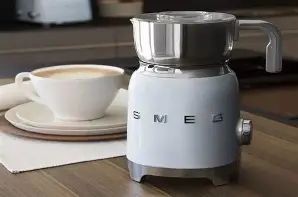
- One-touch operation: A single button or a couple of buttons to select hot froth, cold froth, or warm milk.
- Automatic shut-off: The device stops when the basic cycle completes, reducing the risk of overheating.
- Non-stick interior: Easier to clean and reduces sticking of milk proteins after heating.
- Compact footprint: Designed to live on the counter without dominating space; many buyers appreciate the decorative value.
- Color and finish options: Multiple colors that match other Smeg appliances, enabling coordinated kitchen aesthetics.
There are trade-offs: the simple control scheme reduces complexity but also limits manual control over froth density and temperature. Advanced users who want fine-grained control or steam wand-style texturing will find the feature set intentionally limited.
Pros & Cons
- Pros
- Stylish, retro design that elevates countertop aesthetics
- Compact size — suitable for small kitchens or single-serve households
- Simple one-touch operation for consistent froth with minimal fuss
- Produces satisfying microfoam for cappuccinos and lattes for single servings
- Cold frothing option for iced beverages
- Cons
- Higher price point compared with basic handheld or budget electric frothers
- Limited capacity — not suitable for large households or parties
- Less manual control over foam texture than a steam wand or prosumer machine
- Cleaning requires effort; many models are not dishwasher-safe
- Performance varies with alternative milks—some barista formulations perform better than generic almond or oat milks
Comparison table: Smeg Mini Milk Frother vs common alternatives
| Feature | Smeg Mini Milk Frother | Nespresso-style electric frother | Handheld battery/USB frother |
|---|---|---|---|
| Design & aesthetics | High: Retro styling; countertop-friendly | Medium: Compact and modern but utilitarian | Low: Functional, compact, minimal design |
| Capacity | Small — 1–2 servings | Small — 1–3 servings depending on model | Very small — single serving only |
| Froth quality | Good — creamy microfoam for espresso drinks | Good — consistent foam; reliable | Variable — depends on technique and time |
| Ease of cleaning | Moderate — hand wash recommended | Moderate — removable parts vary | Easy — rinse whisk head |
| Price tier | Premium to mid-premium | Mid-range | Budget |
| Best for | Design-conscious single/couple households | Everyday home baristas wanting consistent results | Occasional frothing and travel |
Buying guide: what to consider before purchasing
Choosing the right milk frother depends on the buyer’s priorities. Below are focused questions and considerations to help match the Smeg Mini Milk Frother to real needs.
1. How many drinks will be made per session?
If the household routinely prepares three or more milk-based drinks at once, a larger-capacity frother or an espresso machine with a steam wand will be more practical. The Smeg Mini Milk Frother excels at single-serve or occasional double-serve workflows.
2. Which milks will be used most often?
Dairy whole milk and barista-formulated plant milks froth best. Buyers who rely on standard plant milks should research compatibility—some brands produce disappointing foam across many devices, while barista versions are formulated to aerate and hold structure.
3. Is counter presence important?
For many Smeg buyers, the appliance’s look is a decisive factor. If a coordinated kitchen aesthetic matters, Smeg’s color options and finish quality add subjective value not captured by raw performance specs.
4. How important is manual control?
Advanced users who want to create latte art or manipulate foam texture will find the Smeg Mini Milk Frother limited. It favors convenience over manual tweakability. Those users should consider machines with steam wands or dual-mode control.
5. Cleaning and maintenance expectations
Consider how much time the household will tolerate for hand-washing. The Smeg Mini Milk Frother requires regular cleaning to maintain flavor and hygiene. If dishwasher convenience is essential, verify whether the model supports it—many frothers do not.
Looking for the best Electronics deals on Amazon?
See Deals →6. Price vs. longevity
Assess whether the premium paid is for durability and performance, or for brand and design. Smeg appliances typically carry a premium for styling and brand cachet; buyers should evaluate whether that design premium aligns with expected usage patterns and satisfaction.
Real-world user scenarios
Below are a few common buyer profiles and how the Smeg Mini Milk Frother matches their needs.
- The design-first renter: Values a coordinated kitchen and will make one specialty coffee each morning. The frother adds a lot of perceived value—both functionally and aesthetically.
- The casual coffee drinker: Wants better milk for occasional cappuccinos and hot chocolates. The convenience and compact size are ideal; volume limits are not an issue.
- The entertaining host: Prepares multiple drinks for guests. The limited capacity means repeated batches; the host may prefer a larger jug frother or a steam wand for speed.
- The experimental non-dairy user: Tries many plant milks and seeks consistent results. Success will depend on milk choice; a machine that allows manual temperature/froth control may be preferable.
Is the Smeg Mini Milk Frother worth the price?
The answer depends on what a buyer values most. If the primary goals are style, single-serve convenience, and consistent basic frothing, then the Smeg Mini Milk Frother offers clear value. The appliance transforms milk for espresso-based drinks in a compact form factor, and the retro finish elevates kitchen décor for many buyers.
For buyers focused purely on bang-for-buck performance—maximum froth per dollar, highest throughput, or fine-grained control—there are alternatives that provide stronger value. Budget handheld frothers perform well for occasional use at a lower price; mid-range electric frothers from other brands can offer slightly higher capacity or removable parts for easier cleaning. For anyone wanting true barista-level texture and temperature control, a machine with a steam wand remains the superior option.
It is also important to account for long-term satisfaction: buyers who appreciate owning visually pleasing appliances and who will use the frother routinely for single servings are more likely to feel the purchase was worthwhile. Conversely, buyers who prioritize volume, dishwasher-safe cleaning, or deep customization may feel the premium is harder to justify.
Final thoughts and conclusion
The Smeg Mini Milk Frother occupies a well-defined niche: a compact, stylish countertop appliance that produces reliable froth for single-serve milk-based drinks while doubling as a kitchen accent. Its strengths are aesthetic cohesion with other Smeg appliances, simplicity of operation, and solid froth quality for everyday drinks. Its limits are capacity, manual control, and the cleaning routine that accompanies milk appliances.
Ultimately, whether it is “worth the price” depends on balancing aesthetic preference and usage patterns against the cost. For design-conscious buyers who make one or two milk drinks per session and want a fuss-free, attractive device, the Smeg Mini Milk Frother is a strong choice. For households that need volume, finely tuned results, or the lowest price for occasional frothing, alternative devices may deliver better practical value.