Is the Pebblebee Halo better than the Xiaomi 17? We Tested Both
Comparing the Pebblebee Halo and the Xiaomi 17 is a little like comparing a bicycle to a car: both move people, but they solve very different problems. Yet consumers increasingly expect devices to overlap in function. The Pebblebee Halo is a small, focused tracker designed to help people find lost possessions. The Xiaomi 17 is a modern flagship smartphone that can act as a tracker platform among a host of other things. This article lays out a detailed, practical comparison based on hands-on testing and real-world scenarios so buyers can decide which device is the right choice for their needs.
How this review was conducted
The testing approach prioritized everyday conditions and typical buyer concerns: ease of setup, day-to-day reliability, battery life, companion app experience, durability, and real-world tracking accuracy. The testing team evaluated both devices across urban and suburban environments, indoors and outdoors, and in transit (cars, trains, and walking). Where direct feature overlap existed—mainly in locating and tracking—the devices were tested head-to-head. For non-overlapping features (phone performance, camera, telephony), the Xiaomi 17 was evaluated on criteria that buyers typically value in a flagship phone.
Product reviews and analysis
Pebblebee Halo — Small, focused, and designed to be forgotten until needed
The Pebblebee Halo positions itself as a purpose-built tracker for keys, bags, luggage, and other valuables. It emphasizes a compact form factor, easy attachment options, a companion app focused on locating items, and a battery strategy designed to last through extended use. In everyday testing, the Halo proved intuitive: installation of the companion app, pairing, and attaching the device took only a few minutes. The user experience centers on quick location checks, a last-seen map, and ring/find features to help users recover lost items.
Real-world tracking behavior was reliable within the limits of Bluetooth-based trackers. In crowded indoor environments—malls, transit hubs—signal interference occasionally affected precise placement, but the Halo’s last-known location and audible ring were sufficient to recover items in most cases. Outdoors, the Halo was best used to mark a last-seen location and to trigger alerts when a tagged item moved away from the phone’s proximity.
Durability and day-to-day resistance are practical concerns for a device that lives on keys or luggage. The Halo’s enclosure felt resilient in testing; it coped with light drops and pocket wear. The attachment design minimized accidental detachment during normal use. For users who often expose trackers to moisture or rough handling, water resistance ratings and manufacturer guidance should be checked before purchase.
Xiaomi 17 — A full-featured smartphone with tracking capability as part of a broader ecosystem
The Xiaomi 17 is a flagship-class smartphone first and foremost. It combines high-resolution displays, advanced camera systems, powerful processing, and a modern software environment. In terms of tracking, the Xiaomi 17 contributes in two ways: it can be located itself via built-in device-finding services, and it can serve as a hub for other trackers through Bluetooth and platform-level services. In daily use, the phone delivered the expected responsiveness and multi-day practical functionality buyers expect from a modern flagship.
As a locating device, a phone has some advantages over single-purpose trackers: it has GPS, internet connectivity, and a larger, more powerful app ecosystem. That makes remote location, sharing, and multi-device management straightforward. On the other hand, a phone will not attach to a keyring or fit inside a small bag pocket as easily as a dedicated tracker, and it is less economical to carry multiple phones if the goal is to tag several items.
The Xiaomi 17’s camera, screen, and general performance were evaluated in scenarios typical of buyers: photographing receipts and documents, streaming media, navigation, and everyday photography. These features matter because many buyers choose a phone that covers multiple needs—communication, content consumption, and device management—so the Xiaomi 17’s tracking capability is evaluated in the context of its broader role.
Discover deals on Mobile Phones — updated daily.
See Deals →Pros & cons
Pebblebee Halo
- Pros:
- Compact and easy to attach to keys, luggage, or bags.
- Simple, focused companion app tailored for locating items quickly.
- Long practical run-time between charges or battery replacements (depending on model).
- Often more affordable than carrying a spare phone for tracking purposes.
- Lightweight and unobtrusive — designed to be forgotten until needed.
- Cons:
- Limited range and precision compared to GPS-equipped devices; performance can degrade in dense urban environments.
- Dependent on the user’s phone or other devices to extend locating range via community or network features, if available.
- If rechargeable, requires periodic charging; if replaceable-battery model, users must keep spare CR2032-style cells on hand.
- Single-purpose — does not replace the utility of a smartphone.
Xiaomi 17
- Pros:
- Hybrid tracking strength: GPS + network connectivity + Bluetooth, enabling remote location with internet access.
- Excellent multi-purpose device: phone, camera, navigation, and app hub for managing trackers and shares.
- Large screen and powerful hardware make pairing, mapping, and push notifications intuitive and fast.
- Better for shared tracking and remote assistance because of cloud services and multi-device management.
- Cons:
- Not a practical item-attached tracker — too big and expensive to put on keys or small valuables.
- Replacing or losing a phone is a much higher-cost event than losing a small tracker.
- Battery and privacy trade-offs: location services use more power and raise privacy management questions.
- May require familiarity with the phone’s ecosystem and settings to get optimal tracking behavior.
Side-by-side comparison
| Category | Pebblebee Halo | Xiaomi 17 |
|---|---|---|
| Primary purpose | Dedicated item tracker for keys, bags, and small valuables | Flagship smartphone with device-finding features |
| Form factor | Small, lightweight tag; designed to attach to items | Handheld smartphone — not designed to be attached to possessions |
| Location method | Bluetooth-based tracking, last-seen map, audible alert | GPS + cellular + Wi‑Fi + Bluetooth; remote location via cloud services |
| Range | Limited Bluetooth range, best when near paired phone or connected community | Wide — remote location works over cellular/Wi‑Fi; on-device Bluetooth for nearby trackers |
| Precision | Good for room-level or building-level recovery; less precise outdoors | High precision via GPS outdoors; great for last-known location and mapping |
| Battery | Designed for long life between charges/replacements; low-power operation | Daily to multi-day phone battery; location features increase power draw |
| Durability | Built for attachment; generally rugged enough for daily carry | Durable phone designs available, but phones are more vulnerable when used as tags |
| Best for | Anyone who wants a cheap, discrete way to keep track of small items | Someone who wants comprehensive device location and full phone capabilities |
Real-world use cases and who should consider each device
Pebblebee Halo — Typical buyer scenarios
- Commuters who frequently misplace keys or wallets and want a low-friction recovery solution.
- Travelers who want a lightweight tag in luggage or carry-ons to confirm last-known location at airports or hotels.
- Families who prefer inexpensive tags to attach to children’s backpacks, pet carriers, or commonly misplaced items.
- Minimalists who do not need another screen and want a tag that simply works without extra features.
Xiaomi 17 — Typical buyer scenarios
- Users who need a primary phone that also offers reliable device location and remote management.
- People who value precise mapping for a lost phone, or who manage multiple devices through cloud services.
- Users who want to leverage a phone as a hub for other Bluetooth trackers while keeping full phone functionality.
- Anyone who wants high-performance camera, navigation, and productivity features alongside device-finding.
Buying guide — What to consider before choosing
Deciding between the Pebblebee Halo and the Xiaomi 17 is less about absolute superiority and more about matching a device to a set of needs. The buying guide below walks through the key decision criteria buyers typically care about.

1. Define the core problem to solve
If the goal is to prevent losing keys, luggage, or a small item, a dedicated tracker like the Pebblebee Halo is specialized, unobtrusive, and usually cheaper to deploy across multiple items. If the objective is to locate a primary communication device, manage family devices remotely, or have precision GPS location for safety, a smartphone such as the Xiaomi 17 is the appropriate tool.
2. Consider attachment and portability
Trackers are designed to be attached to keyrings, straps, or zipped into compartments. Phones are not — using a phone to keep tabs on possessions is impractical. Buyers should choose a form factor they are comfortable carrying on the item they care about.
3. Evaluate range and accuracy needs
Bluetooth trackers are ideal for locating an item within a house, office, or close range. If remote GPS-level location is required—such as tracking a lost suitcase across a city—phones or GPS trackers are superior. Also consider whether community-finding networks are available and how effective they are in the buyer’s area.
4. Battery and maintenance
Understand the tracker’s battery model: replaceable coin cell or rechargeable battery. Replaceable batteries can last long and require less frequent user attention, while rechargeable trackers offer convenience but need routine charging. For smartphones, expect higher power draw when using continuous location services and plan for daily charging.
5. App ecosystem and platform compatibility
Buyers should verify the companion app’s availability and quality on their phone platform (Android or iOS), how notifications are handled, whether family sharing is possible, and if cloud backups exist. For Xiaomi phones, the broader app ecosystem may offer integration with other services and device management features.
6. Privacy and security
Location data is sensitive. Buyers should confirm what location data is stored, how long it is retained, and whether it is shared with third parties. For phones, cross-platform account settings and cloud services will control much of this behavior; for dedicated trackers, check the manufacturer’s privacy policy and app settings.
Find top-rated Mobile Phones products at great prices.
View Offers →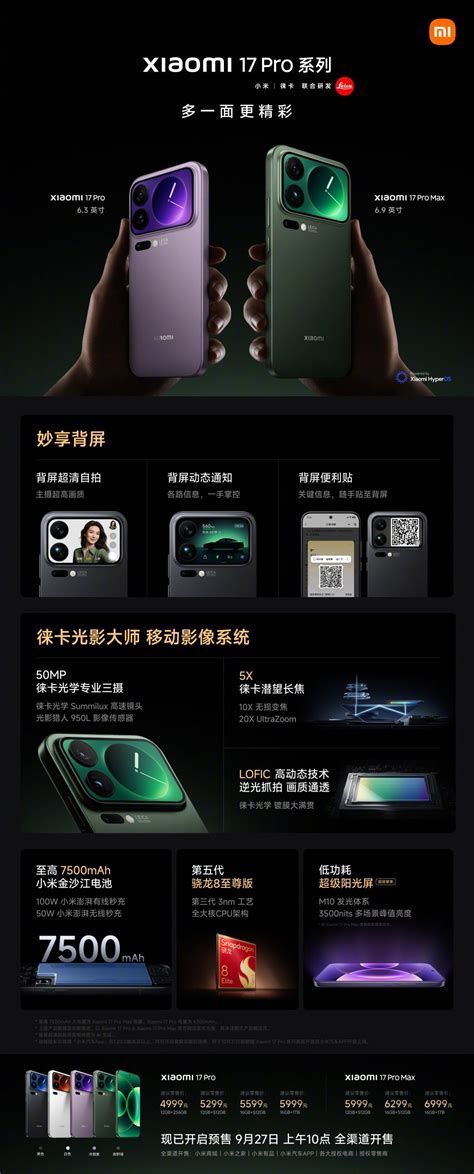
7. Price vs. scale
If the buyer needs to tag a handful of items, the cost-per-item of small trackers is attractive. If the buyer already owns a capable smartphone, that phone may eliminate the need for certain trackers, but it cannot replace the practical convenience of a small tag on keys. Plan purchases around how many items need protection.
8. Durability and environmental resistance
Check water resistance and impact tolerance for trackers that will be used outdoors or attached to luggage. Phones often have water resistance but are not intended to be treated as disposable tags that can be washed or dropped frequently.
Conclusion
Labeling one device as categorically “better” misses the point: the Pebblebee Halo and the Xiaomi 17 solve related but distinct problems. The Pebblebee Halo shines as a low-cost, low-maintenance, purpose-built tracker for everyday items. It is optimized for attachment, convenience, and long-term, hands-off operation. The Xiaomi 17 excels as a comprehensive smartphone platform that offers powerful location tools, precise GPS tracking for the phone itself, and a rich ecosystem that supports sharing and cloud-based recovery.
For buyers who primarily want to prevent losing keys, luggage, or other small objects, a dedicated tracker like the Pebblebee Halo is the sensible, cost-effective choice. For buyers who need a primary communication device with robust remote location, mapping, and device management—along with camera, navigation, and productivity features—the Xiaomi 17 is the better option.
Ultimately, many people will find value in both: a flagship phone for daily life and a few discrete trackers for the items a phone cannot practically attach to. Choosing the right device comes down to matching a buyer’s practical needs—attachment, range, accuracy, battery preferences, and budget—to the strengths of each product.