Biggest Insta360 X4 Air Buying Mistakes (And How to Avoid Them)
Introduction
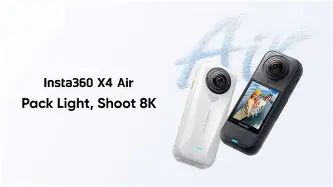
The Insta360 X4 Air has attracted attention for blending 360-capable capture with an action-camera form factor aimed at creators who want flexible framing and strong stabilization. As with any category-blurring device, buyers commonly make avoidable errors when choosing, setting up, and using the X4 Air. This article explains the most frequent mistakes, analyzes the product’s strengths and limitations in real-world use, and provides a clear buying guide so photographers, travelers, and action-sports enthusiasts get the intended results without frustration.
Why the X4 Air attracts mixed expectations
The X4 Air sits between compact 360 cameras and traditional single-lens action cameras. That hybrid positioning means buyers often expect the simplicity of a single-lens camera with the framing freedom of 360 capture — and that mismatch in expectations is the root of many returns and complaints. Understanding trade-offs up front prevents disappointment: the X4 Air can offer immersive footage and flexible reframing, but workflow, accessories, and settings matter more than with a plain action cam.
Detailed product review and analysis
Design and ergonomics. The X4 Air typically follows the Insta360 approach of keeping controls simple while packing in computational features. The body and button layout suit handheld use and most common mounts. For buyers who prioritize quick one-handed operation — such as motorcyclists or cyclists — the physical buttons and a small status screen make it possible to start recording without a phone. For studio or tripod use, the camera’s mounting points are standard, but stability on uneven surfaces requires a flat base or tripod adapter.
Image quality and capture modes. In real-world shooting — travel, POV sports, and short-form social videos — the advantage of a camera that can capture a wider field and allow reframing in post is clear. However, 360-derived reframing often results in different crop factors, so the final “frame” can look softer or require stabilization from software. Buyers who expect identical sharpness and low-light performance to a dedicated large-sensor action camera should temper expectations. The X4 Air is optimized for versatility and computational smoothing rather than maximum low-light fidelity.
Stabilization and motion handling. Stabilization is one of the X4 Air’s headline features in everyday scenarios: walking tours, bike rides, drone mounts, and handheld gimbals. Computational stabilization performs best when the camera is mounted solidly and motion is continuous; erratic snapping movements and frequent stops/starts can confuse the algorithm. For fast-paced sports (downhill mountain biking, motocross), stabilization still helps, but choosing the right capture mode and frame rate is critical to avoid motion artifacts.
Audio and accessories. On-board microphones are fine for ambient sound and casual vlogging, but they do not replace a purpose-built external microphone in noisy environments or when dialogue clarity is essential. Buyers aiming to record interviews or voiceovers should plan for either a separate audio recorder or an external mic solution and learn sync workflows. Accessories — protective cases, extended batteries, ND filters, and an assortment of mounts — dramatically change the camera’s flexibility. A common buyer mistake is to presume “it’s ready out of the box” for every scenario when, in practice, a small kit of accessories is essential for consistent results.
Software and post-production workflow. Insta360’s mobile and desktop apps are often praised for easy reframing, auto-editing, and social-ready export presets. Real-world users, however, find the learning curve non-trivial when chasing advanced looks: stitching artifacts, color grading of 360 footage, and export codecs require some familiarity. Buyers should plan to invest time learning the workflow or allocate an existing editor in their toolkit. Expecting instant perfect edits without a basic understanding of reframing, stabilization options, and bitrate choices is a frequent source of disappointment.
Real-world use cases
- Travel vlogging: The X4 Air is useful for travelers who want to capture both scenery and themselves without juggling rigs. Reframing in post helps produce a polished narrative without missing moments.
- Action sports POV: Motorcyclists, cyclists, and skiers benefit from wide capture and stabilization, but should pair the camera with helmet mounts and an anti-vibration solution.
- Real estate and 360 tours: For quick immersive captures, the camera can be a time-saver. However, proper leveling and stitching checks are important for professional results.
- Social-short-format creators: Creators producing vertical or portrait content can extract re-framed single-lens clips and add dynamic pans post-capture.
Top buying mistakes and how to avoid them
Mistake 1: Expecting DSLR-level image quality
Many buyers assume the X4 Air will match the low-light performance or depth-of-field control of a larger-sensor camera. In reality, computational optimization and stabilization introduce trade-offs. For low-light-heavy workflows, a mirrorless or DSLR remains superior.
How to avoid it: Match the camera to the intended use. If most shoots are daytime travel, action sports, or social clips, the X4 Air is a strong fit. If the goal is cinematic shallow depth or night documentary work, consider supplementing with a larger-sensor camera.
Mistake 2: Underestimating battery and storage needs
High-resolution and high-frame-rate captures consume battery and storage quickly. Buyers sometimes rely on the internal battery for a full day without carrying spares or a power plan.
Looking for the best Cameras & Photography deals on Amazon?
Shop Amazon →How to avoid it: Carry at least one spare battery or a small power bank and extra high-speed microSD cards rated for sustained video recording. Monitor recording habits: long 360 clips are storage-heavy and require higher sustained write speeds for reliable capture.
Mistake 3: Skipping essential accessories
Not all shooting scenarios are covered by the camera alone. Lack of mounts, stabilization hardware, or protective solutions limits what the camera can do.
How to avoid it: Buy a small kit: a tripod or mini tripod, adhesive mounts, a floating handle (for water-adjacent use), and a protective pouch. For hands-free action, secure the right helmet or chest mount and check compatibility before hitting the trail.
Mistake 4: Misunderstanding reframing and export quality
Because the X4 Air enables reframing, some expect to crop anywhere without loss. However, reframing reduces effective resolution and requires careful planning for final delivery formats.
How to avoid it: Plan composition with reframing in mind: if the final video needs to be 4K single-frame, capture at the highest native setting and avoid aggressive digital zoom in post. Test different export settings to balance bitrate and file size for target platforms.
Mistake 5: Ignoring firmware updates and app workflows
Firmware and app updates often fix stability, compatibility, and performance issues. Buyers who skip updates can encounter bugs or miss new features.
How to avoid it: Check for firmware updates before a trip and verify the mobile/desktop app versions. Spend time on the app’s tutorials or quick-start guides to understand auto-edit, reframing tools, and export options.
Mistake 6: Overlooking audio recording strategy
On-board microphones are convenient but limited, especially with wind or engine noise. Buyers sometimes expect usable voice-quality audio straight from the camera in noisy environments.
How to avoid it: Plan for external audio when necessary. Use a lapel mic, external recorder, or post-production voiceover. If relying on built-in audio, use wind-reduction accessories and test sample takes before full sessions.
Pros & Cons
- Pros
- Flexible reframing and 360-capable capture for varied outputs
- Strong computational stabilization for handheld and POV use
- Compact and mount-friendly design suitable for adventure shoots
- Mobile and desktop tools that simplify reframing and social exports
- Cons
- Reframed crops can reduce effective resolution and sharpness
- Limited low-light performance compared with larger-sensor cameras
- On-board audio is serviceable but not professional-grade
- Requires accessories and learning time to maximize results
Comparison table: X4 Air vs typical alternatives
| Category | Insta360 X4 Air | Typical Action Camera | Large-Sensor Mirrorless |
|---|---|---|---|
| Capture flexibility | High — 360/reframe options | Medium — fixed FOV | Medium — lens swaps for different fields |
| Stabilization | Strong — computational stabilization | Strong — optical/electronic stabilization | Varies — in-body or lens stabilization |
| Low-light performance | Average | Average to good (varies) | Excellent |
| Audio quality | Basic onboard; external needed for pro audio | Basic onboard; external possible | Professional with external mics |
| Ease of editing | High for reframing; requires learning for best results | Straightforward edits, fewer steps | Complex but powerful |
| Portability | Compact and lightweight | Compact and rugged | Less portable, heavier |
Buying guide: what to check before purchasing
1. Define the main use case
Decide whether the priority is immersive 360 footage, single framed action footage, travel vlogs, or professional shoots. The X4 Air shines when the value is in reframing and stabilization rather than purely low-light cinematography.
Discover deals on Cameras & Photography — updated daily.
Browse Now →2. Budget for essentials (not just the camera)
Factor in spare batteries, high-quality microSD cards, mounts, a small tripod, and a protective case. For those who plan to record audio or stream, budget for external audio gear and sync solutions.
3. Check storage and format compatibility
Confirm the supported card types and recommended speed classes for continuous recording. Understand the default file formats and whether the editing workflow (mobile or desktop) supports existing codecs in the buyer’s editing software.
4. Verify mounting options and compatibility
Look at the camera’s physical mounting points and confirm compatibility with existing mounts (helmet, chest, drone, selfie-stick). A mismatch in mounts is a common annoyance that can delay shoots.
5. Evaluate battery strategy
Ask how long typical recordings last in the target mode. Many buyers find a single spare battery and a small power bank cover most day trips; for longer expeditions, plan multiple spares or an external power solution.
6. Test the software ecosystem
Assess the mobile and desktop apps. A good app speeds the workflow for creators who post frequently; a cumbersome app can add hours of post-production time. If possible, test the app with sample footage or watch tutorial walkthroughs before committing.
7. Consider service and warranty
Check the manufacturer’s warranty policy and available service options. For adventure photographers who use the camera in harsh conditions, warranty terms and service turnaround times influence the total cost of ownership.
8. Think about resale and upgrade paths
Hybrid devices tend to be popular on the second-hand market, but rapid firmware-driven changes and evolving feature sets can affect resale value. Buyers who like frequent upgrades might prioritize trade-in-friendly retailers or community markets.
Accessory checklist
- Two or more spare batteries and a compact charger
- High endurance microSD cards with recommended speed rating
- Mounting kit: helmet, chest, adhesive mounts, mini tripod
- Protective pouch or case for transport
- External microphone or wind protection for on-location audio
- Floating grip if the camera will be used near water
- ND filters or neutral density solutions if planning manual exposure control (where supported)
Practical tips for first-time owners
- Update firmware and app before the first outing; run a few test captures to check settings, battery life, and audio.
- Record short test clips in target conditions (lighting, motion) and practice reframing/export workflows.
- Label and organize microSD cards to avoid mix-ups mid-trip.
- Use a simple shot list to avoid over-reliance on the camera’s “fix it later” abilities — planning reduces post-production time.
- When shooting fast action, prefer continuous recording rather than frequent start/stop to maintain stabilization consistency.
Conclusion
The Insta360 X4 Air is a flexible tool that rewards buyers who understand its strengths and limitations. The most common purchase mistakes stem from mismatched expectations, inadequate accessory planning, and underestimating the post-production learning curve. When paired with the right accessories, reasonable expectations about low-light and audio performance, and a bit of practice with its software, the X4 Air becomes a powerful camera for travel, adventure, and creative social content. Buyers who approach the camera with a clear plan — what they want to capture, how they will power and store footage, and how they will edit it — will avoid the typical pitfalls and get the most from the device.